Wine, Wine, Wine
We present wines from our region. These are currently served (come by and see for yourself), drunk up because the guests liked it so much and the wine of the corresponding vintage (this is in the nature of things) could no longer be reordered. Some wines are not served anymore because they were put back, saved, just before they were drunk. And finally, you can read some interesting facts about the wine, the cellar and the pressing process.
₪ ₪ ₪

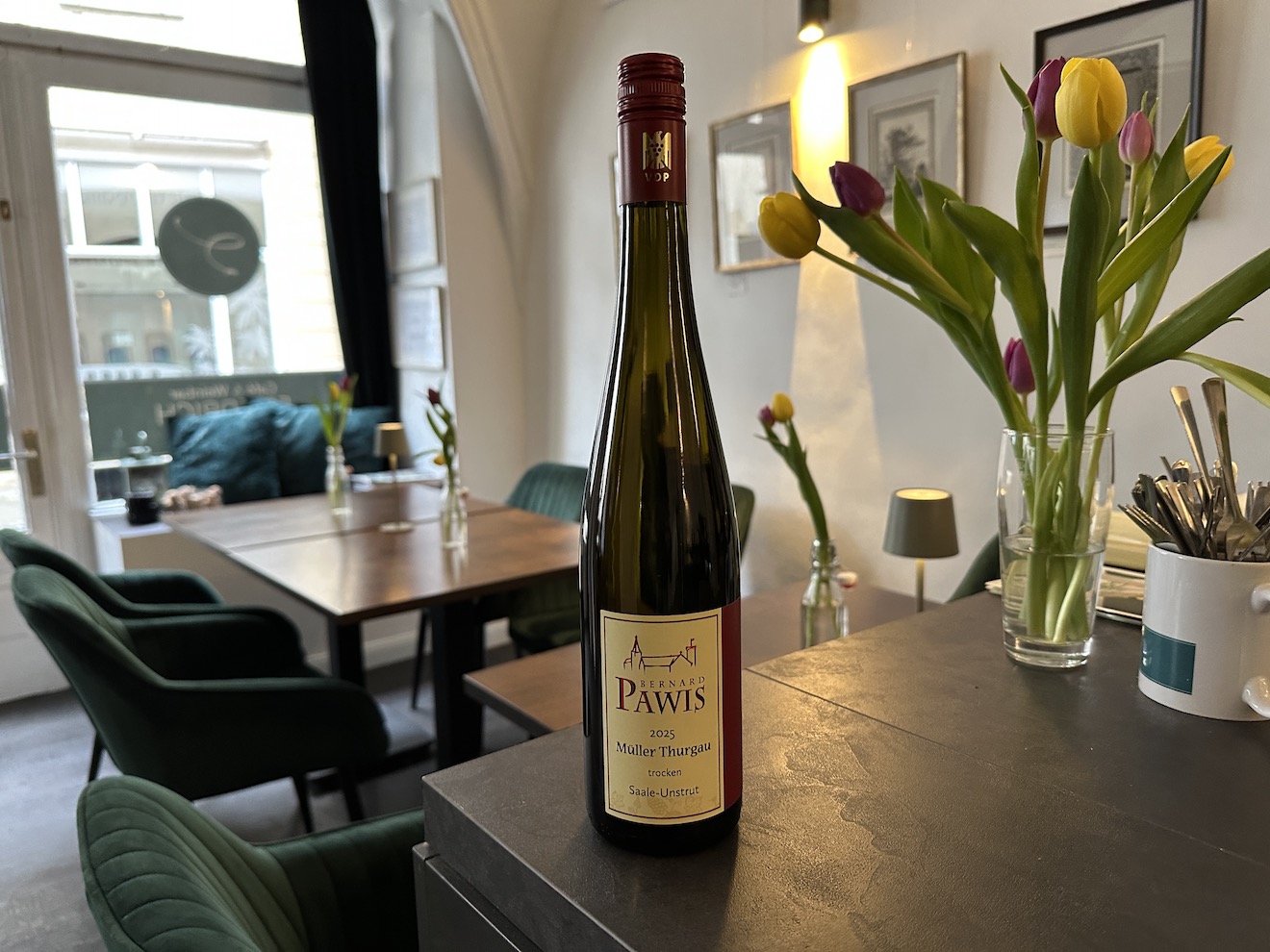
 2018 Spätburgunder Edition Winery Wein- und Sektmanufaktur
This red wine from the Naumburg wine and sparkling wine manufactory matured in oak barrels.
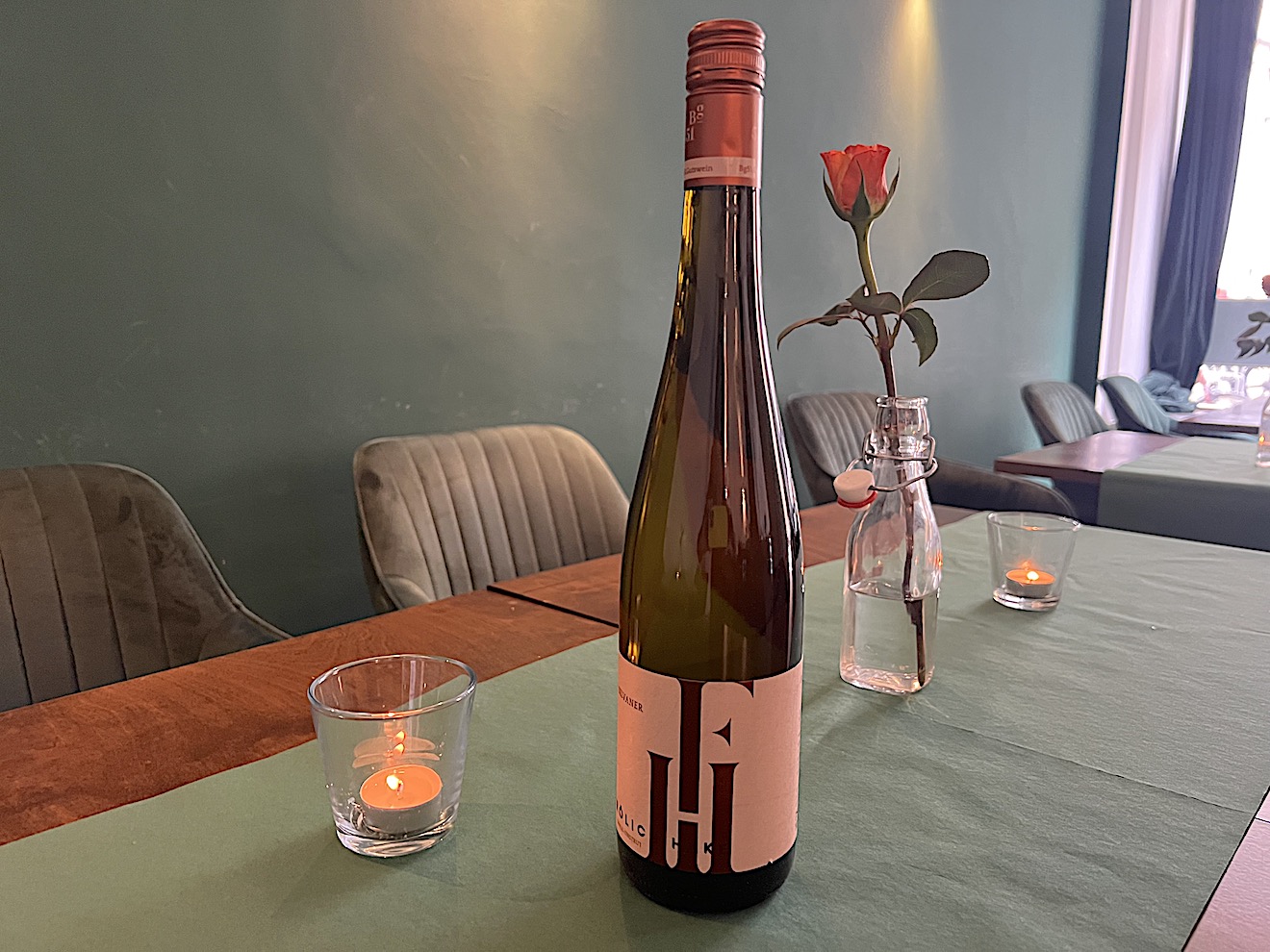
2023 Silvaner medium-sweet Winery Frölich Hake
This medium-sweet Silvaner unfolds a tantalising interplay of aromas in which the familiar sweetness of ripe green apple takes centre stage.

Federweisser - new white wine
Federweisser is the German term for new white wine. It is a grape must pressed from white grape varieties whose fermentation has only just begun. All degrees of maturity, from white grape must to almost fully fermented white wine, may be called Federweisser. However, Federweißer must have a minimum alcohol content of 4% when sold in Germany.
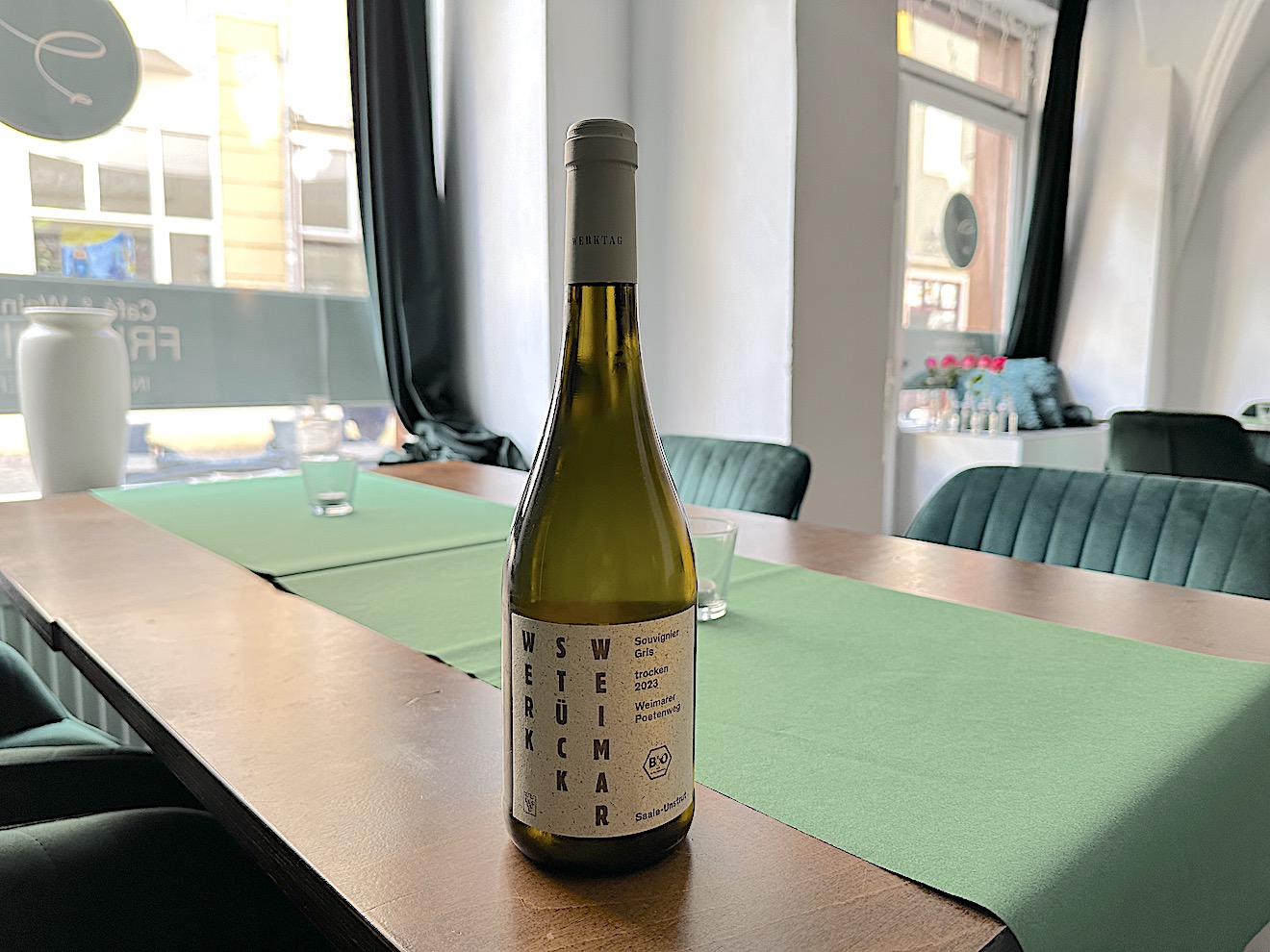
2023 Souvignier Gris Werkstück Weimar Winery Winzervereinigung
This Souvignier Gris - Spätlese - is a low-acid wine with a subtle fruitiness. It delights with a complex bouquet of ripe pear, juicy quince and exotic yellow fruits. A hint of citrus and a slight melt complement the fruity composition and give the wine its rich, full-bodied and full-flavoured structure.

2022 Traminer Muschelkalk Winery Grober Feetz
This off-dry white wine is produced entirely by hand by the family winery Stephanie Grober and Tino Feetz, from the vineyard to their own cellar, bottled and labelled, a labour-intensive process. A pleasure in every respect.
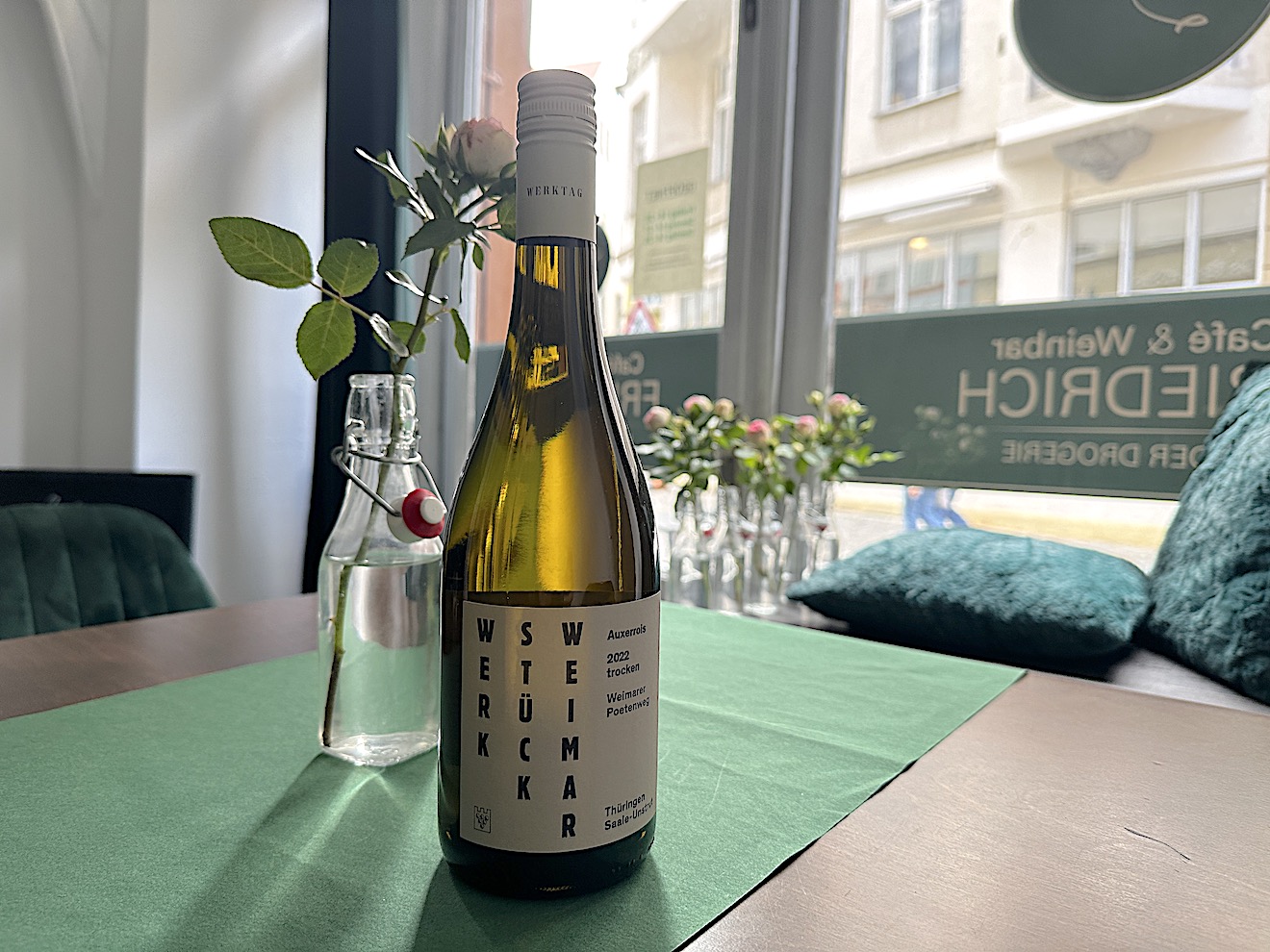
2023 Auxerrois Werkstück Weimar Winery Winzervereinigung
This Auxerrois is a low-acid wine with a rich bouquet of pears, nuts and elderflower. It has a unique grapefruit flavour. This makes the Auxerrois from Weimarer Land one of the fruity grape varieties. Origin from the Weimar Poetenweg.

Auxerrois
Auxerrois belongs to the Burgundy family and is a natural cross between Pinot and Pinot Blanc.

2023 Riesling & Traminer Winery HEY
The Riesling brings a lot of fruit and a crisp acidity, while the Traminer skilfully counteracts this with its fine aroma.

2023 Grauburgunder Edelacker GG Winery Pawis
The Grosse Gewächse wines show their origin from the estate's best vineyards.

2022 Spätburgunder Muschelkalk Winery Frölich Hake
The Spätburgunder (Pinot Noir) vines for this rosé wine grow exclusively on shell limestone soils.
2023 Cabernet blanc Winery Pawis
The aroma of the wine is reminiscent of an elegant Sauvignon Blanc. Vegetable, spicy aromas of green grass, gooseberry and light notes of bell pepper are also typical.

Cabernet blanc
This is a fairly new grape variety among those cultivated in Germany, having only been bred in 1991.

Wine-growing region Saale-Unstrut
We endeavour to present our guests in our ‘Friedrich’ a comprehensive cross-section of the wines produced in the region. Our region is the Saale-Unstrut wine-growing region: small but beautiful, very young in modern times, yet with a very long history - that is the Saale-Unstrut wine-growing region.

2022 Weißburgunder GG Steinmeister HEY
A Weißburgunder (Pinot Blanc) at its finest! Straightforward and clear with juice and fruit, flavourful and slender.

Gutedel
The white Chasselas (german Gutedel) grape variety is certainly very, very old and is definitely one of the oldest of all grape varieties. The German capital of Chasselas is located in the Markgräferland region (between Freiburg i. Br. and the border with Switzerland).

Silvaner
The Silvaner grape variety is one of the oldest grape varieties in Europe. It probably originates from Austria. It has been native to Germany since the 17th century. It is a natural cross between Traminer and Austrian white.

Riesling
Riesling is a white grape variety that is generally a flagship of German viticulture. Germany is almost certainly the country of origin. Even today, almost half of the world's total acreage is located in Germany. The grape variety has been cultivated in Germany for at least 600 years (first mentioned in writing in Worms in 1402 1435*).

Morio Muscat
The white grape variety Morio Muscat was bred by Peter Morio in 1928. Morio, who worked at the Geilweilerhof Institute for Grapevine Breeding, claimed that Silvaner and Weissburgunder (Pinot Blanc) were the parents of the cross. However, this did not stand up to DNA analyses carried out in 2012.